
In this article:
Learn how to add a contract to the Contracts register in Logiqc.
Contracts stored in the Contracts register are formal agreements that require regular review or renewal, such as funding agreements, MOUs, and supplier contracts. To add one, complete each section of the Contract details page described below. Once submitted, the contract moves into the workflow for management and approval before it's published to the register.
Contract management is vital for ensuring compliance with legal obligations and mitigating financial risk in your organisation. A controlled process of review also helps to ensure staff are accessing the correct and latest approved version of a contract.
The contract management workflow: when a new contract is added to the Contracts register, it moves through the workflow to the Contract manager, and is finally approved and published by the Contract owner. Learn more
Q: What is a contract?
A: Contracts stored in the Contracts register are formal agreements that require regular review or renewal, such as funding agreements, MOUs, and supplier contracts.
Q: What permission do I need to add a contract?
A: You need the Add contracts permission. The minimum licence type required is Action.
Q: Can I publish a contract straight away without sending it through the workflow?
A: Yes, if you are the Contract owner. When you are the Contract owner, the Quick publish option becomes available so you can approve and publish the contract immediately when you save.
Before you start
Check the following:
- You have the Add contracts permission (minimum licence type required: Action).
- You have the contract file ready to upload, or a link to the contract if it's stored online in another platform.
Step 1: Go to Add a contract
From the Contracts register, select the option to add a new contract to open the Add a contract page.
Navigation path
Select Governance from the left-hand navigation.
Select Contracts to open the Contracts register.
Select + Add to open the Add a contract page.
Step 2: Complete the Contract details
In this component you'll describe and categorise the contract, and specify the date the contract is to be next reviewed.
Learn more about this in the article:
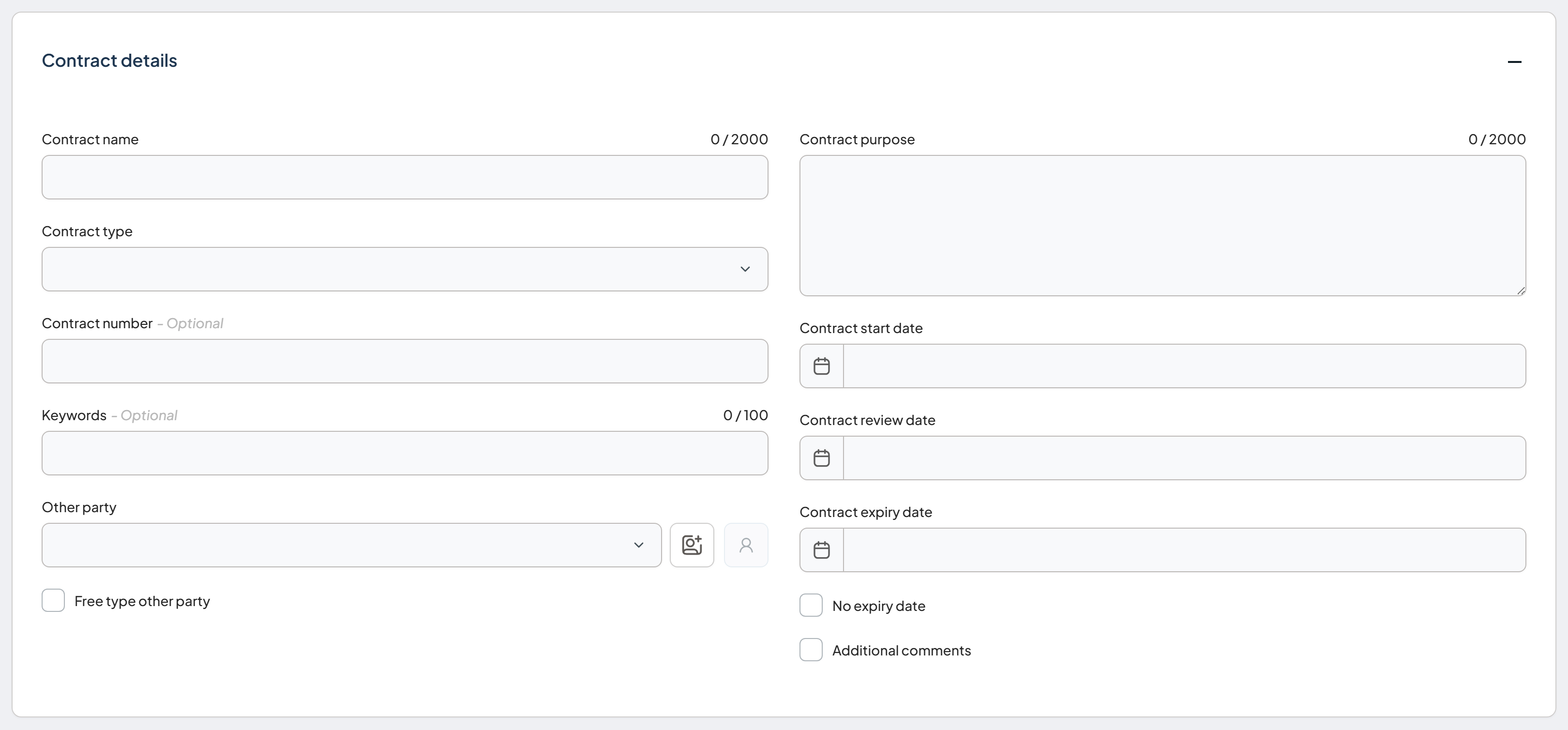
Describe and categorise the contract in the Contract details component.
| Field | Description |
|---|---|
| Contract name | Enter the title of the contract. |
| Contract ID number (optional add-on) | If enabled in your platform, enter a contract ID# in line with your organisation's policy. The ID must be unique (no duplicates with other contracts) and can be up to 12 characters in length. |
| Contract type | Select the type of contract, for example Funding contract. |
| Contract number (optional) | Enter the contract number if applicable. |
| Keywords (optional) | Referenced when you search for items in the platform. Add common terms people might use to search for the item, especially if the title is not familiar. |
| Other party | Enter the name of the other party to the contract. The menu displays people entered on the Contacts register, such as suppliers and key organisational contacts. If the other party is not in the list, add them to the Contacts register or free-type their name. |
| Contract purpose | State the purpose of the contract. |
| Contract start date | Select the start date of the contract. |
| Contract review date | Select the date the contract is to be next reviewed. This is the date that triggers a task for the Contract manager to review the contract. The review date must be a date in the future. |
| Contract expiry date | Select the contract expiry date. If the contract does not have a specific expiry date, select No expiry date. The expiry date cannot be left blank without selecting No expiry date. |
| Additional comments (optional) | Enter additional comments relating to the contract, for example comments relating to contract variations. |
Step 3: Add funded programs (optional)
Enter the names of the programs or services that the contract provides funding for. Use the menu to select the person responsible for each program. To remove a program, select the trash can icon.
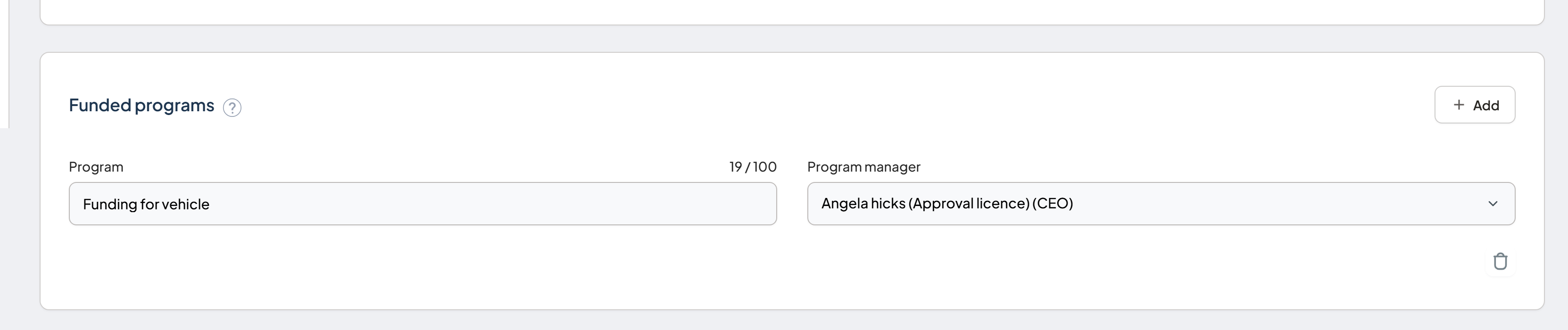
List the programs the contract funds and assign a person responsible for each.
Step 4: Add related risks (optional)
Enter an assessment of the risks to the organisation associated with entering (or not entering) into the contract. If the Risk register is activated in your platform, you can also link the contract to one or more identified risks.
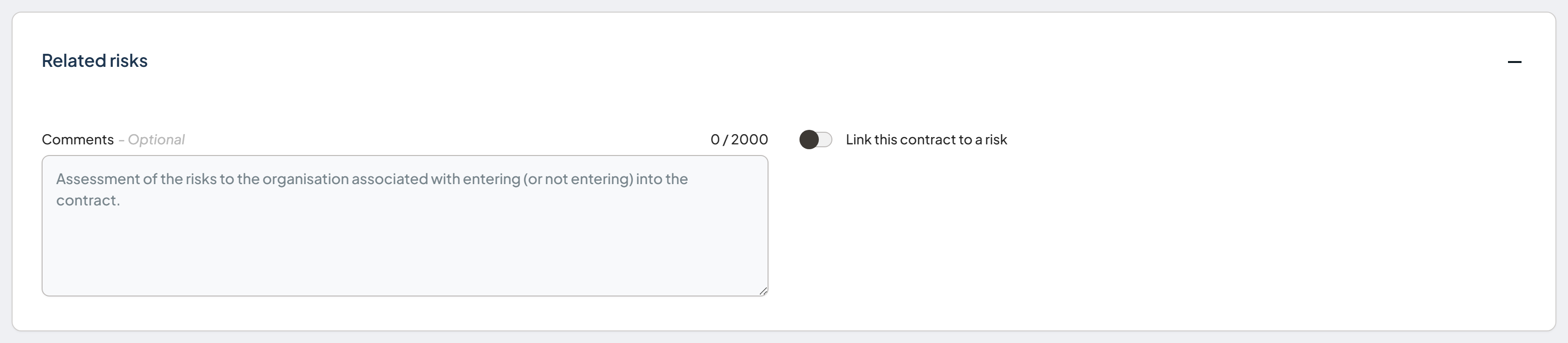
Assess the risks of entering, or not entering, into the contract.
Step 5: Add financial details (optional)
Record financial details relating to the contract. These values can also be exported along with a list of contracts for reporting purposes.
Payment schedule: create a payment schedule to record anticipated payments over the life of the contract. Select Add to create a new payment entry and repeat to record multiple payments.
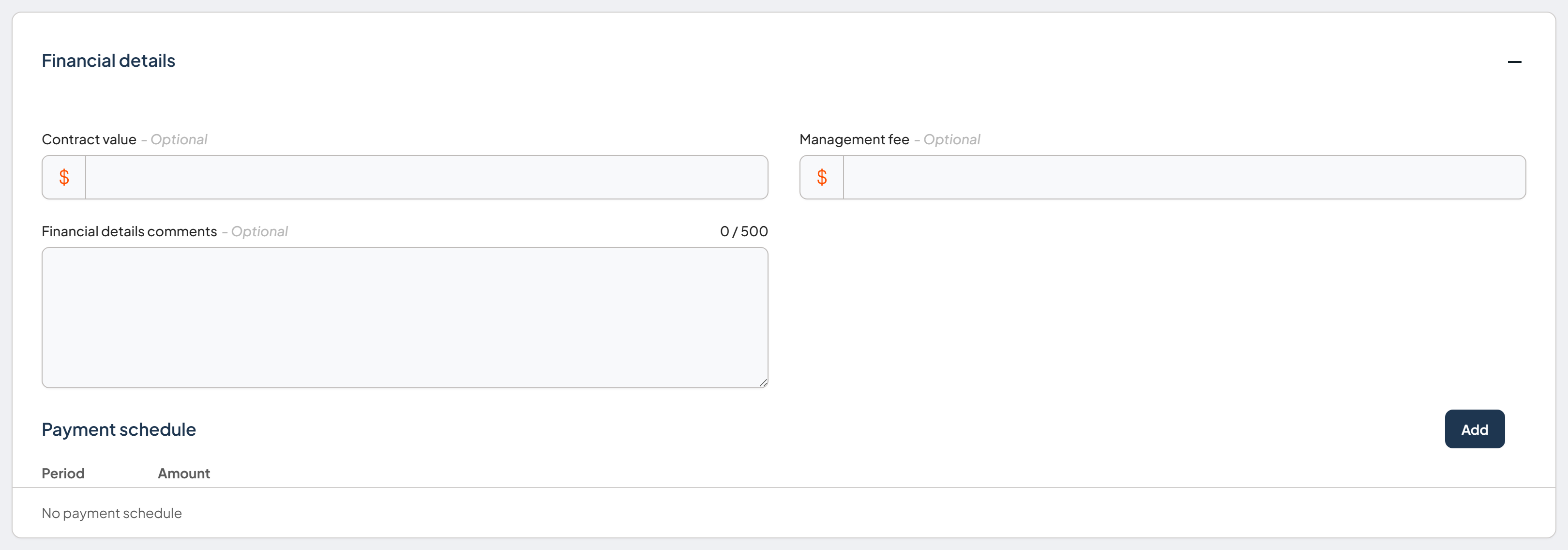
Record the contract value and build a payment schedule for anticipated payments.
Payment reports: to generate a report on the expected payments per year over the life of the contract, go to Governance register reports on the Analytics page and select the Contract payment schedule report. Use the filters to refine your report to the relevant contract type, and select the ellipsis to adjust the columns displayed.
Step 6: Assign
In this component you set responsibilities for approving and monitoring the contract. These choices should align with organisational delegations relating to the management of contracts.
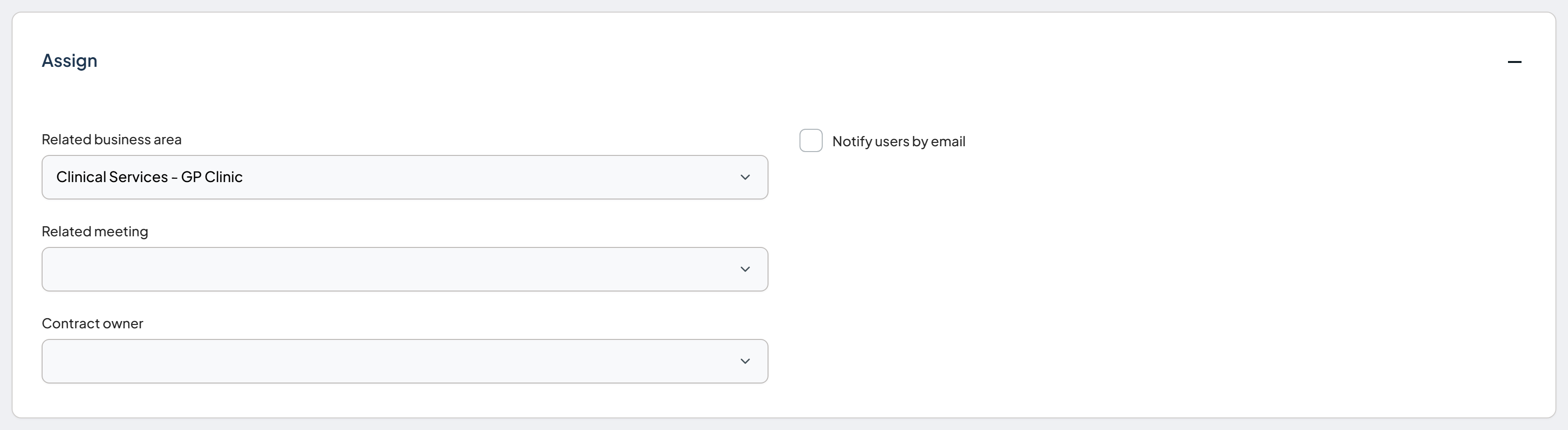
Set responsibilities for approving and monitoring the contract in the Assign component.
| Field | Description |
|---|---|
| Related business area | Select the business area the contract relates to. |
| Related meeting | Select the meeting that has oversight responsibility for the management of the contract. Transparency in responsibility leads to greater accountability. |
| Contract owner | Select the staff member who is accountable for the contract and has the authority to approve it being published to the Contracts register. If you are the Contract owner, the Quick publish option becomes available for immediate publishing when you save. |
| Notify users by email (optional) | Notify relevant personnel that the contract has been added to the system. Note: recipients must be included in Viewing permissions to see the contract. |
Step 7: Set access control
Set which users will have access to view the contract. You can grant access to all users, or to specific teams and individual users.

Grant access to all users or to specific teams and individual users.
If you specify who can access:
- Teams: select the team/s who need to view the contract.
- Individual users: select specific users (if they are not included in the selected team/s) who need to view the contract.
Step 8: Build a workflow (optional)
Read the article to find out more:
Step 9: Upload the contract
Use this component to upload a file, or add a link to the contract if it's stored online in another platform.

Upload a file or add a link in the Upload contract component.
Step 10: Submit
Select Submit to save your changes and progress the item to the next stage of the workflow. The button label changes depending on the available action.
Available if you are the Contract owner. Immediately approves and publishes the contract to the Contracts register.
Saves your changes, uploads the contract and moves it to the Manage stage. The label changes depending on certain conditions.
Quick publish: if you are the Contract owner, you can skip the Manage and Approve stages by selecting Quick publish. Quick publish will immediately approve the contract and publish it to the Contracts register.
Submit/Next: saves your changes, uploads the contract and moves it to the Manage stage.
Create: if you want to create a linked item in another register, use the top-bar Create button and select the relevant register. When the new item is saved, Logiqc records the link between the two items in the System event history.
Other parts of the Contract details page
View contract
In this component you can preview the published version of the contract and any draft versions in the workflow. A brief overview of the contract management details is also provided.
Select the Email link button to send a link to the page to another user via email. Recipients will require a Logiqc user account to access the contract.
Add new version
This component can be used to upload a new version of the contract for approval, or for immediate publishing if you are the Contract owner.
You can only add a new version if the contract has the status of 'Approved'. If the contract is in a review workflow cycle you will not be able to add a new version.
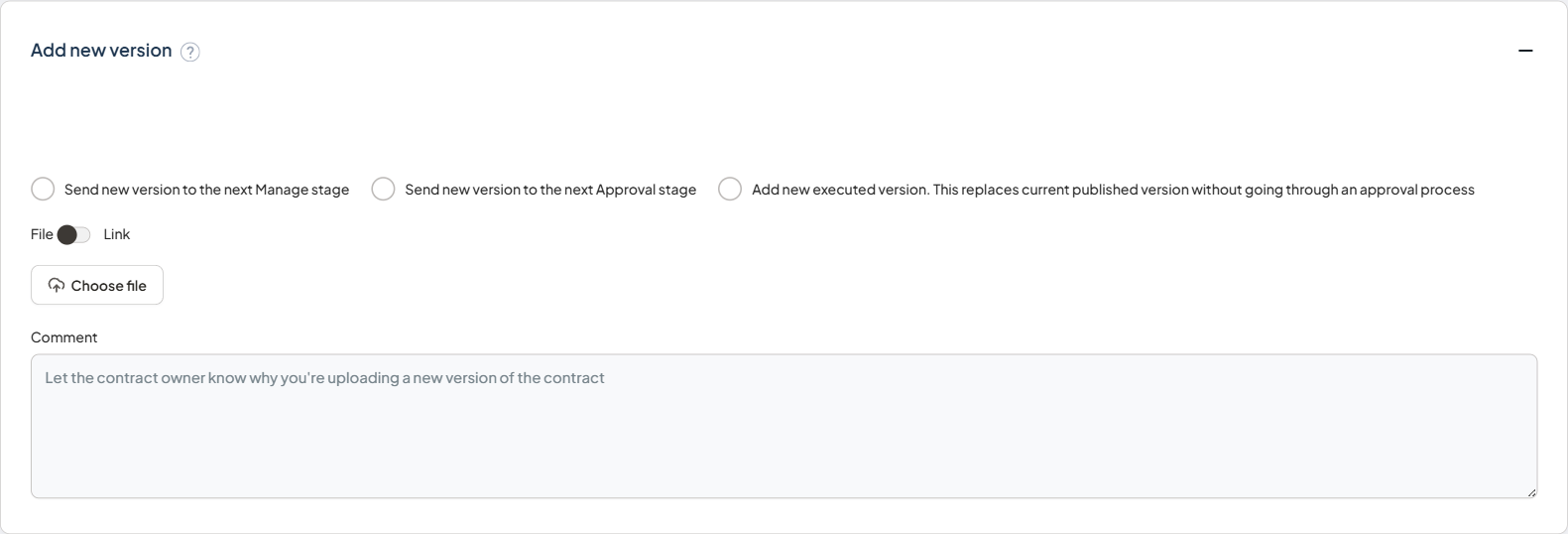
Upload a new version of the contract from the Add new version component.
Send new version to the Manage stage: select this option to send the new version of the contract to the Contract manager for review of the changes made.
Send new version to the Approval stage: select this option if the contract does not require any further review, or when you are the Contract manager.
Quick publish: this option is available if you are the Contract owner. Quick publish will publish the contract immediately.
System event history
The System event history is a chronological record maintained by the system detailing entries and changes made to the page, including links to any related items created by users. Select the + control on the right to expand the line item to see more information.
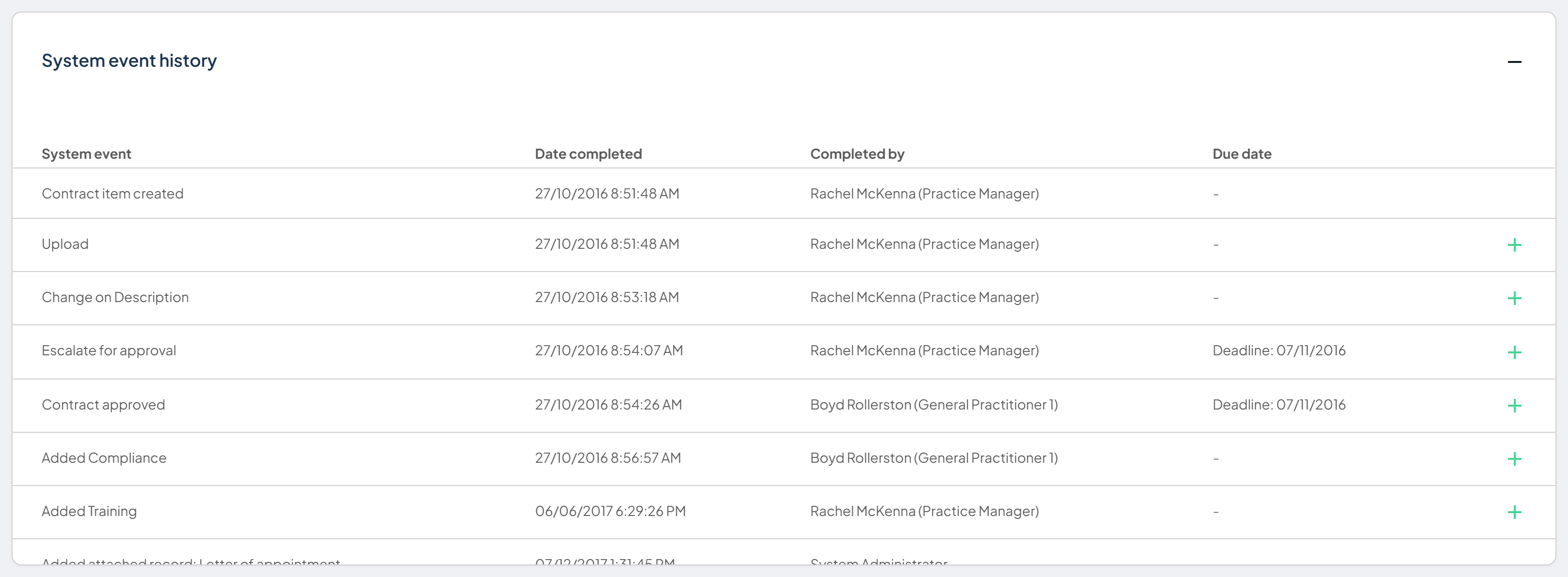
The system event history records entries and changes made to the page.
What happens next
The contract moves to the Manage stage
When a new contract is added to the Contracts register, it moves into the workflow at the Manage stage, and a Manage task goes to the assigned Contract manager.
The Contract manager is notified
Logiqc sends a Manage task to the assigned Contract manager so they know action is required, and the contract progresses through any review stages you built.
The contract is published
Once approved by the Contract owner, the contract is published to the Contracts register and available to users with access. If you are the Contract owner, you can use Quick publish to publish immediately.
To keep going, see: