
In this article:
Learn how the Access control component manages who can view register items and the records attached to them in Logiqc. You'll find it on an item's details page, and again in the Attached records section, where it works the same way.
By default, every user on the platform can view a new item, regardless of team membership. If some items shouldn't be visible to everyone, such as sensitive HR documents or records attached to a contract that only certain parties should see, you can restrict access to specific teams, individual users, or both.
The Access control component appears on the details page for register items and in the Attach records section. Its settings control who has permission to view the item or record.
All users can access is selected by default when a new item is added.
Q: Do attached records inherit access from the register item?
A: Yes, initially. Attached records inherit the item's viewing permissions when added, but access to each attached record can be changed independently.
Q: Does Who can view show only the teams and users I selected?
A: No. It also shows users with the See all items permission and users included in the item's workflow.
Before you start
Check the following:
- No special permission is required. Any user who can view and edit the item can use Access control.
Step 1: Go to the Access control component
Navigation path
Open any register, select an item, then go to its details page. The Access control component sits alongside the item's other settings.
Step 2: Choose who can access
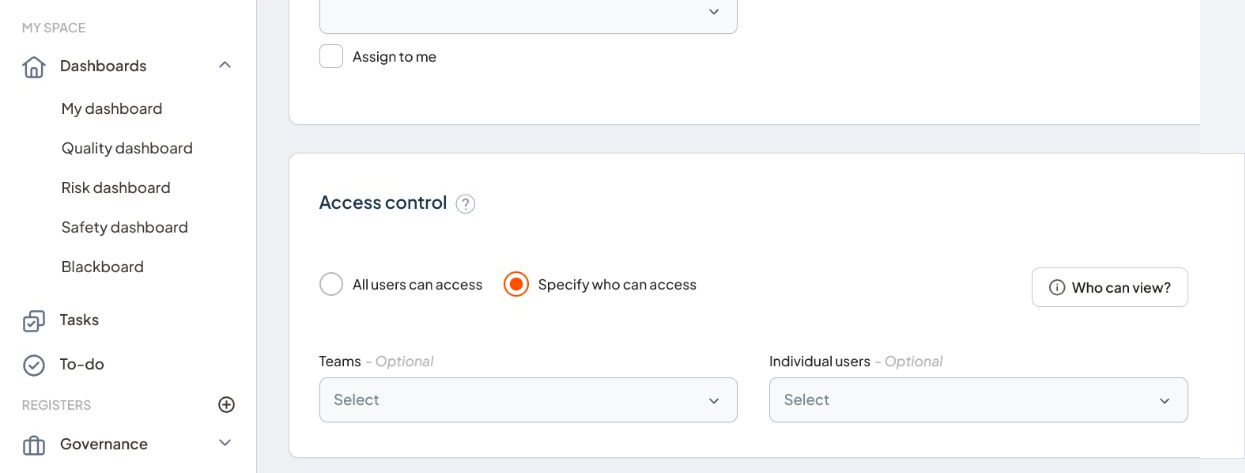
Restrict access by selecting the relevant teams and individual users.
If you select Specify who can access:
- Teams: select one or more teams. Current members of those teams can view the item.
- Individual users: select users who need access regardless of their team membership.
Caution: Access assigned to an individual remains tied to that person, even if their position changes. Use team access where access should follow a role or group. This helps preserve clarity of access and supports compliance with privacy legislation.
Learn more about managing your teams.
Step 3: Check who can view
Select Who can view? to see the people who currently have access.
The list includes:
- Members of the selected teams
- Individual users added through Access control
- Users with the See all items permission
- Users involved in the item's workflow, such as the person managing or closing it
Attached record access
In some circumstances you'll be able to set access to attached records independently from the main record. This only applies to registers that support attaching records, and it works the same way as the Access control component described above.
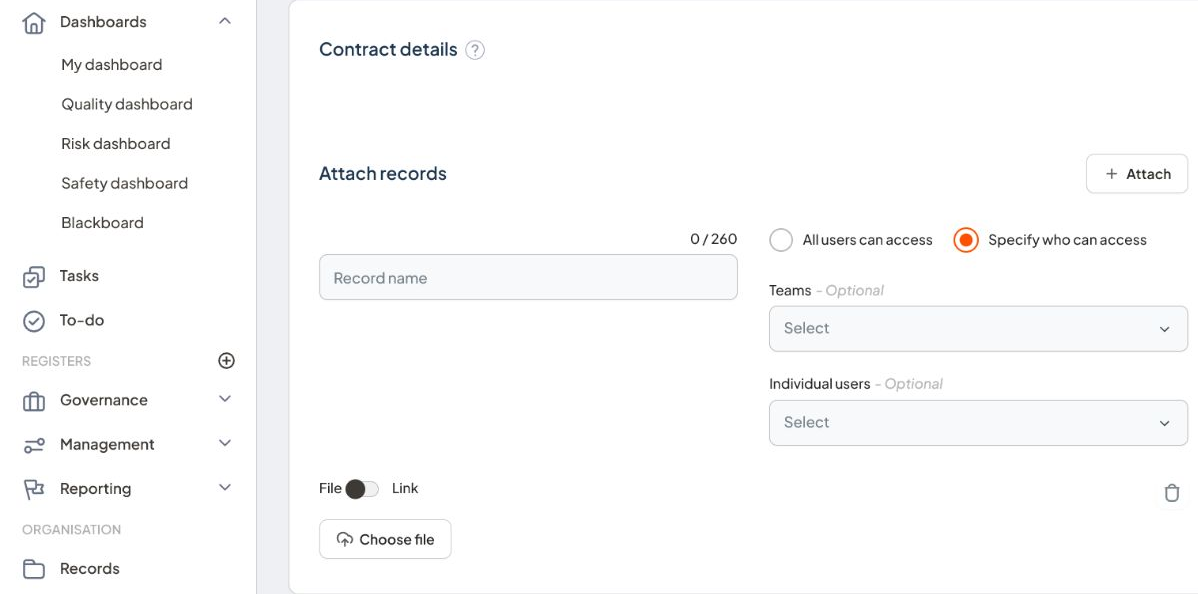
The same component appears here, next to each individual attached record.
Troubleshooting
If something is not working as expected:
"I notified a user about this item, but they say they can't see it"
- Notifying a user, for example through Notify users by email, does not grant them viewing access. The two settings are independent.
- Open the item's Access control component and check whether the user is covered, either directly under Individual users or through a team they belong to.
- Add them under Specify who can access if they're missing.
What happens next
Access takes effect immediately
As soon as you save, only the teams and individual users you selected can view the item.
Everyone else loses visibility
Users who are not included, and do not already have the See all items permission or a role in the item's workflow, no longer see it in their register.