
Complete an audit task to carry out the assigned audit, record the outcome, and provide evidence for review. The Action stage brings together the audit instructions, any linked audit tool or agreement, progress notes, attached records, identified issues and improvements, and the action taken.
You can make a progress note when the work is not yet complete, or sign off the task when the audit work and supporting records are ready for the Approval officer.
Complete the task when the assigned audit work and supporting records are ready for the Approval officer to review.
If the audit is still underway, select Make a progress note. Record any non-conformances or improvement opportunities in Identified issues and improvements before signing off the task.
Q: What should I do if the audit is not finished?
A: Select Make a progress note, record what has been completed or what is still required, then submit the note. The task remains assigned to you in the Action stage.
Q: Can I add more than one progress note?
A: Yes. Add as many progress notes as needed while the audit remains in progress.
Q: Where do reported non-conformances and improvement opportunities go?
A: When the audit task is completed, they appear in the Improvements register and are assigned to the selected person for management.
Before you start
Check the following:
- You have the Action Audit, Compliance and Maintenance tasks permission (minimum licence type required: Action).
- You have read the task instructions and opened any audit tool, related agreement, checklist, or attachment.
- You have the evidence and details needed to record the action taken and any identified issues or improvements.
Step 1: Open the audit Action task
Open your assigned task from Tasks, or open the audit from the In progress view and select Action.
Navigation path
Select the Description link for the audit. Task type shows as Action.
Step 2: Review the audit task
Read the Task instructions and review the information and evidence connected to the audit before you begin.
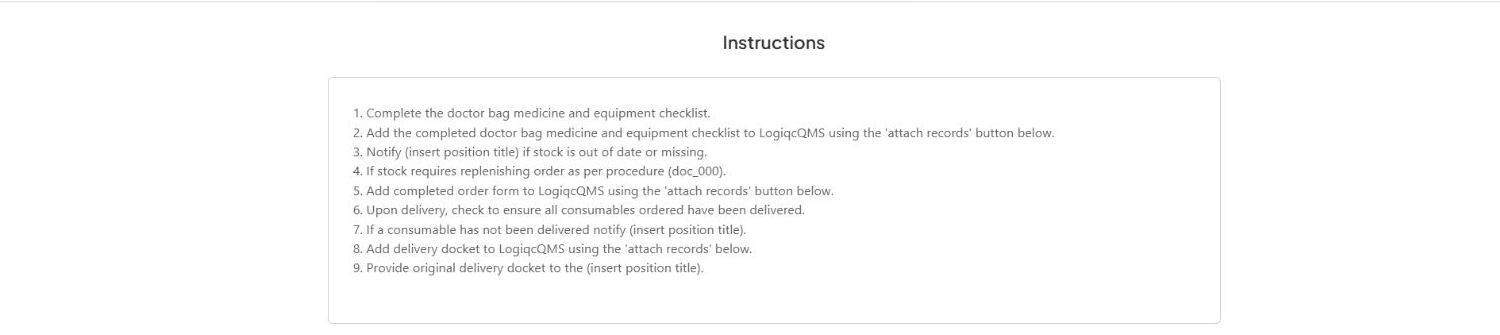
Review the task instructions and linked audit tool before completing the audit.
| Area | What to review |
|---|---|
| Task instructions | The audit scope, purpose, method, due date, and any specific evidence or output required. |
| Audit tool | The audit template or controlled document selected when the audit was scheduled. |
| Related agreement | Any linked contract or agreement that sets requirements relevant to the audit. |
| Action history | Earlier workflow events, progress notes, and comments. Where a date is shown, use the interface detail to identify who recorded the entry. |
| Attached records | Checklists, instructions, correspondence, or evidence already attached to the audit. |
Step 3: Choose a task option
Select the option that matches the work you need to record. Complete the field that appears, then submit your update.
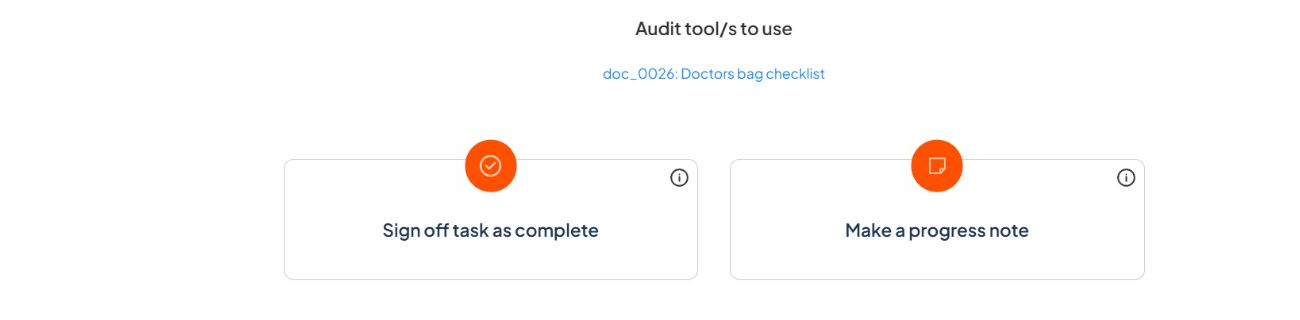
Choose whether to complete the audit task or record progress and return to it later.
Sign off task as complete: describe the action taken and complete the audit work so it can move to the Close stage. Select Additional comments if you need more space.
Make a progress note: describe the work completed so far or what remains outstanding. The task stays assigned to you in the Action stage.
Step 4: Record identified issues and improvements
Select Add in Identified issues and improvements when the audit identifies a non-conformance or improvement opportunity that must be managed beyond the audit.
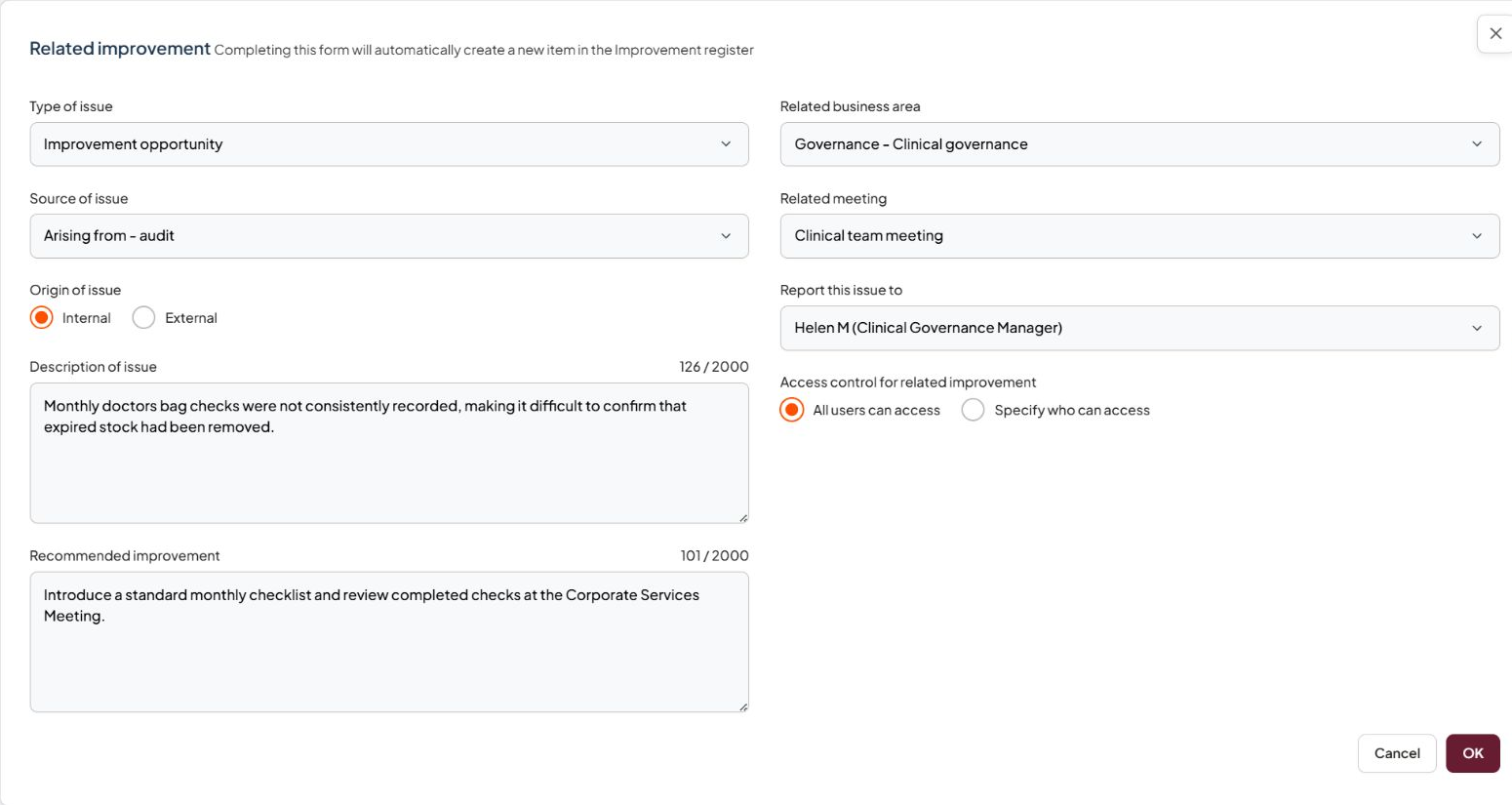
This example records an internal audit improvement and assigns it to the Clinical Governance Manager.
| Information | Guidance |
|---|---|
| Type of issue | Select Non-conformance for a corrective action, or Improvement opportunity for an opportunity to improve. |
| Source and origin | Record that the issue came from the audit and whether its origin is internal or external. Identify the external organisation when applicable. |
| Description | Describe what happened, the requirement or expected outcome, and the evidence. Focus on the issue rather than prescribing a solution. The field accepts up to 2,000 characters. |
| Recommended improvement | Describe the action or outcome recommended to address the issue. |
| Responsibility and access | Select the person the issue is reported to, the related meeting when relevant, and who may view it. |
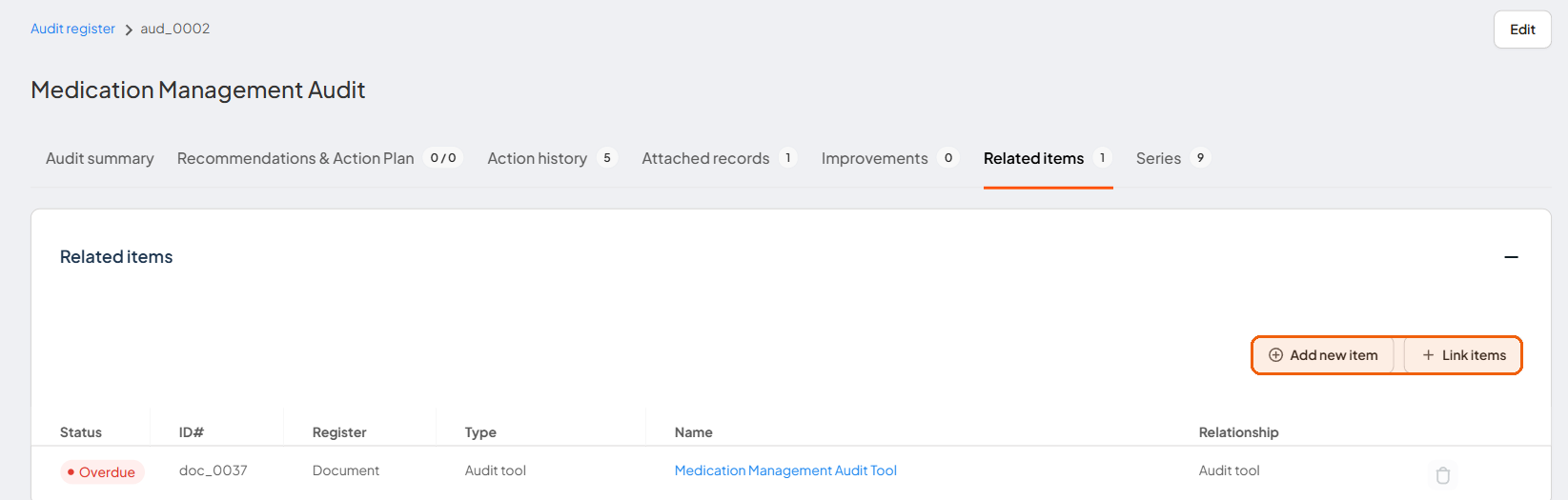
Related items lists the records linked to the audit.
Step 5: Attach supporting records (optional)
Use the audit's Attached records area to upload evidence or add a link. Give each record a meaningful name, such as Internal audit checklist and evidence, August 2026.
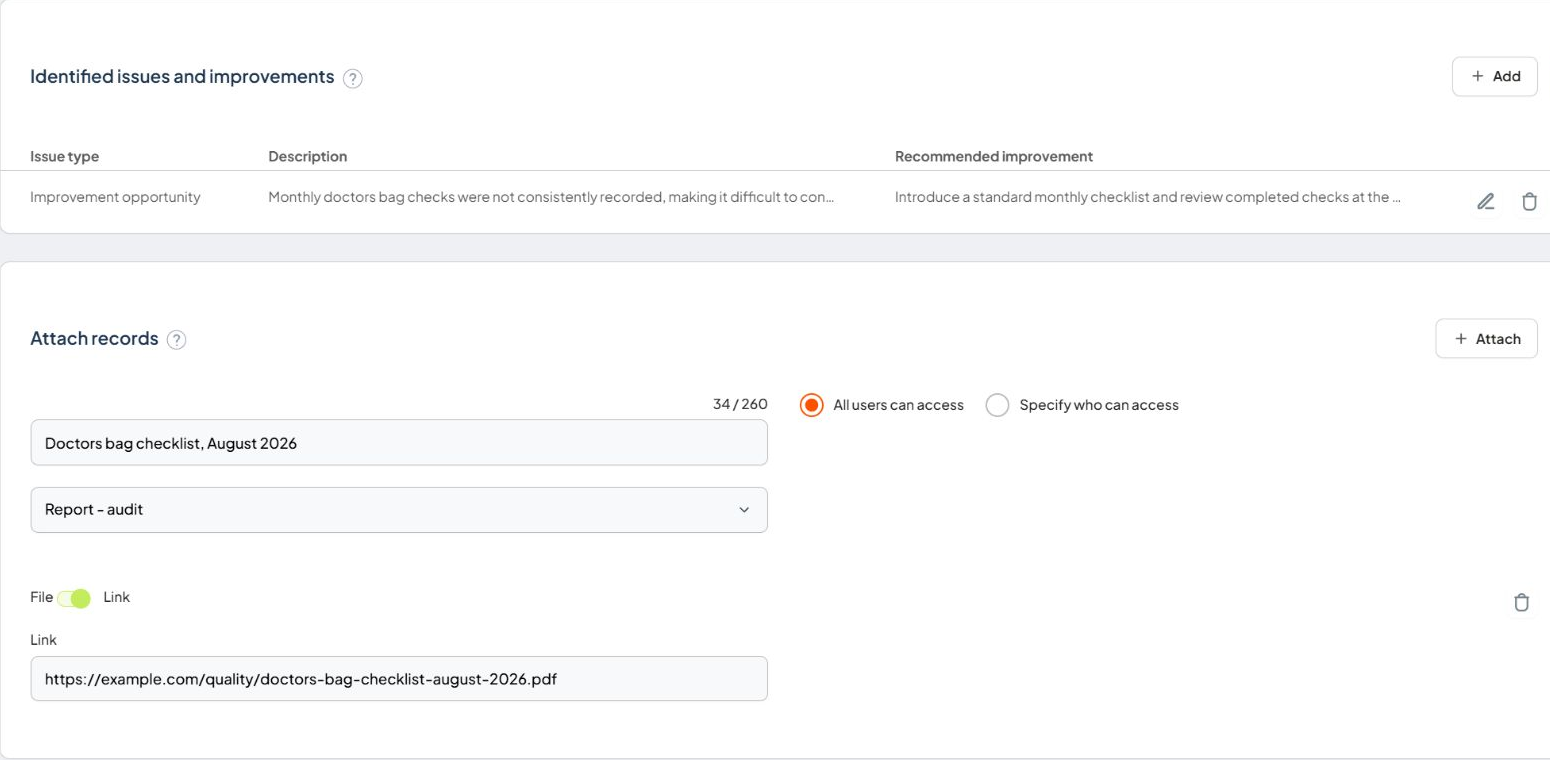
The staged task includes a documented improvement opportunity and a linked audit report before submission.
Read the article to find out more:
Step 6: Submit the task update
After choosing a task option and completing the required field, select Submit. The outcome depends on the task option you selected.
Progress note: the note is added to the Action history and the audit remains assigned to you.
Task signed off: the audit moves to the Close stage and is assigned to the Approval officer.
Create: use the top-bar Create button to create a linked item in another register. The relationship appears in Related items and the System event history.
Other sections
System event history
This section provides a chronological record of changes, assignments, submissions, and workflow events. It also records related items created from the audit.
Expand an event when you need to see more information about it.
What happens next
Progress notes keep the audit in Action
The task remains assigned to you until it is completed.
Reported issues enter the Improvements register
Non-conformances and improvement opportunities are assigned for management.
The Approval officer reviews the completed audit
The audit moves to the Close stage when the task is signed off.